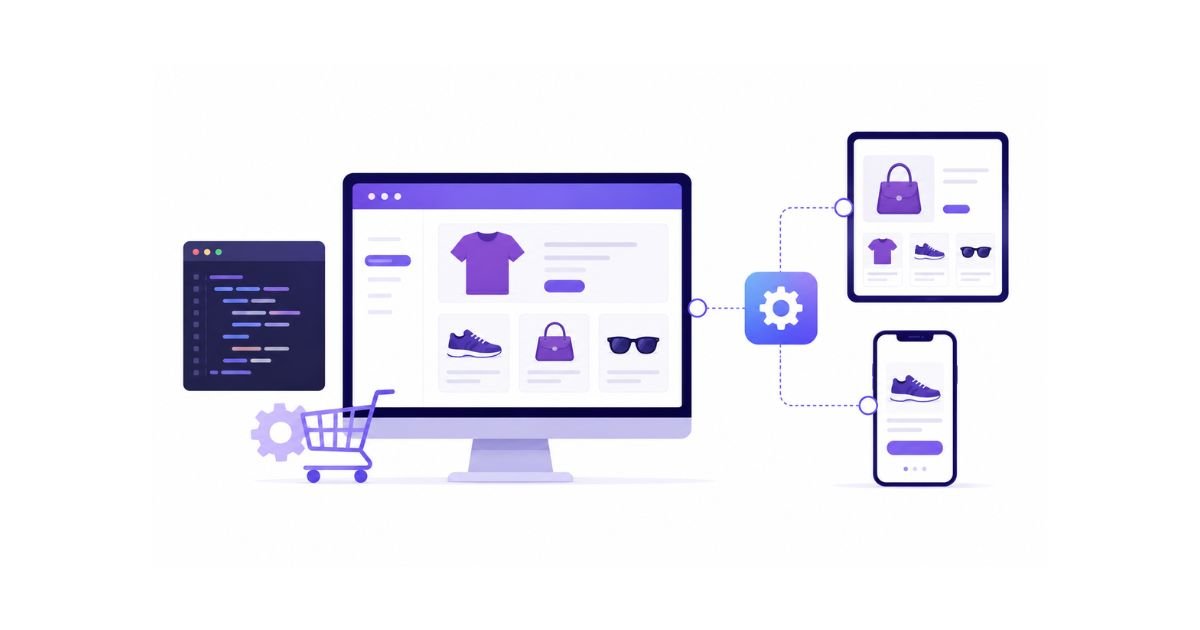
Headless ecommerce development is an ecommerce architecture where the frontend presentation layer is separated from the backend commerce engine. This approach allows businesses to create faster, more flexible, and highly customized shopping experiences across websites, mobile apps, marketplaces, kiosks, and other digital channels while maintaining a centralized ecommerce backend.
Key Takeaways
- Headless ecommerce separates the frontend from the backend.
- Businesses gain greater flexibility in design and user experience.
- Headless architecture supports omnichannel commerce.
- Faster website performance can improve customer satisfaction and conversions.
- APIs play a critical role in connecting frontend and backend systems.
- Headless ecommerce is increasingly popular among growing and enterprise-level ecommerce brands.
Customer expectations have changed dramatically over the past decade. Modern shoppers expect fast-loading websites, personalized experiences, seamless mobile interactions, and consistent shopping journeys across multiple channels.
Traditional ecommerce platforms often struggle to keep up with these demands because the frontend and backend are tightly connected. While this structure works well for many businesses, it can limit flexibility, customization, and innovation as ecommerce operations grow.
This challenge has led many brands to adopt headless ecommerce development.
Headless commerce gives businesses the freedom to build unique customer experiences while maintaining the powerful ecommerce functionality required to manage products, orders, inventory, and payments. Instead of being restricted by platform limitations, businesses can design experiences specifically tailored to their customers and growth goals.
From global retailers to rapidly growing direct-to-consumer brands, headless ecommerce has become one of the most significant trends shaping the future of online commerce.
In this guide, we’ll explore how headless ecommerce works, its architecture, benefits, challenges, implementation process, and best practices for businesses considering this modern ecommerce approach.
What Is Headless Ecommerce Development?
Headless ecommerce development is the process of building ecommerce platforms where the frontend user interface operates independently from the backend commerce infrastructure.
In traditional ecommerce systems, the frontend and backend are tightly coupled.
For example:
- Product pages
- Shopping carts
- Checkout processes
- Customer accounts
are directly connected to the ecommerce platform’s built-in presentation layer.
In a headless architecture, these components are separated.
The frontend communicates with the backend through APIs, allowing businesses to create highly customized experiences without changing core commerce functionality.
How Headless Ecommerce Works
Headless ecommerce relies on APIs to connect the customer-facing frontend with backend ecommerce systems.
A simplified architecture looks like this:
Frontend Layer
Responsible for:
- Website design
- User experience
- Mobile applications
- Customer interactions
API Layer
Acts as the communication bridge between systems.
Handles:
- Product information
- Inventory data
- Orders
- Customer information
- Checkout requests
Backend Commerce Engine
Manages:
- Products
- Pricing
- Inventory
- Payments
- Customer accounts
- Order processing
This separation allows businesses to innovate faster while maintaining operational stability.
Traditional Ecommerce vs Headless Ecommerce
Understanding the difference helps businesses determine whether headless commerce is the right solution.
| Feature | Traditional Ecommerce | Headless Ecommerce |
| Frontend Flexibility | Limited | Extensive |
| Customization | Moderate | High |
| Omnichannel Support | Limited | Strong |
| Development Complexity | Lower | Higher |
| Performance Potential | Moderate | High |
| Scalability | Moderate | High |
| Innovation Speed | Slower | Faster |
Traditional ecommerce platforms remain suitable for many businesses, while headless commerce offers greater flexibility for organizations with advanced requirements.
Why Businesses Are Adopting Headless Commerce
Businesses are moving toward headless ecommerce because it enables greater flexibility, better customer experiences, and improved scalability.
Faster Customer Experiences
Website speed directly impacts:
- User satisfaction
- Conversion rates
- Revenue
- Search visibility
Headless architectures often allow for faster frontend performance.
Omnichannel Commerce
Modern consumers interact with brands across:
- Websites
- Mobile apps
- Social commerce platforms
- Marketplaces
- In-store experiences
Headless commerce supports consistent experiences across all channels.
Improved Developer Flexibility
Development teams can work on frontend experiences without affecting backend operations.
This accelerates innovation and deployment cycles.
Better Customer Experiences
Businesses can create highly personalized shopping journeys.
Examples include:
- Dynamic product recommendations
- Personalized promotions
- Interactive shopping experiences
Future Scalability
As businesses grow, headless architectures provide greater flexibility to support expansion.
Core Components of a Headless Ecommerce Architecture
Frontend Application
The frontend is responsible for customer interactions.
Common technologies include:
- React
- Next.js
- Vue.js
- Angular
The frontend can be optimized specifically for performance and user experience.
E-commerce Engine
The backend commerce platform manages:
- Products
- Orders
- Payments
- Inventory
- Customers
The backend remains the operational core of the business.
API Layer
APIs connect systems together.
They allow the frontend to retrieve information and perform actions without direct dependency on backend templates.
Content Management System (CMS)
Many businesses integrate a CMS to manage:
- Blog content
- Landing pages
- Marketing content
- Product information
This provides greater content flexibility.
Third-Party Integrations
Headless commerce often includes integrations with:
- CRM platforms
- ERP systems
- Marketing tools
- Analytics solutions
- Customer support systems
Benefits of Headless Ecommerce Development
Headless ecommerce provides businesses with greater flexibility, performance, scalability, and customer experience capabilities.
Superior Website Performance
Fast websites improve:
- User experience
- Conversion rates
- SEO performance
Performance improvements are often a major reason businesses adopt headless architectures.
Greater Design Freedom
Development teams are not restricted by platform templates.
This enables unique brand experiences.
Better Omnichannel Experiences
Businesses can deliver consistent experiences across multiple touchpoints.
Faster Innovation
Frontend updates can be deployed independently from backend systems.
This reduces development bottlenecks.
Easier Integrations
Headless architectures are designed around APIs, making integrations more flexible.
Long-Term Scalability
Headless systems can support growing traffic, product catalogs, and operational complexity.
For businesses investing in custom ecommerce development, headless architecture often provides a strong foundation for future growth.
Need a Modern Ecommerce Solution?
Build a high-performance ecommerce platform with scalable headless commerce architecture designed for growth and customer experience.
Popular Headless Ecommerce Technologies
Several platforms support headless commerce development.
Shopify Hydrogen
A modern framework designed for Shopify storefront development.
Adobe Commerce (Magento)
Offers enterprise-level flexibility and headless capabilities.
BigCommerce
Provides API-driven ecommerce functionality.
CommerceTools
Designed specifically for composable commerce architectures.
Saleor
An open-source commerce platform supporting headless implementations.
Next.js
One of the most popular frontend frameworks for headless ecommerce projects.
Headless Ecommerce Development Process
Successful headless ecommerce projects follow a structured development process focused on planning, architecture, and long-term scalability.
Step 1: Discovery and Strategy
Identify:
- Business objectives
- Customer requirements
- Technical needs
Step 2: Architecture Planning
Define:
- Frontend technologies
- Backend platform
- API strategy
- Integration requirements
Step 3: Frontend Development
Create:
- User interfaces
- Customer experiences
- Mobile optimization
Step 4: Backend Integration
Connect frontend applications with backend commerce systems.
Step 5: API Development
Build and optimize communication between systems.
Step 6: Testing
Test:
- Functionality
- Performance
- Security
- Compatibility
Step 7: Deployment
Launch the platform and monitor performance.
This process aligns with the broader ecommerce website development process while adding architectural complexity specific to headless commerce.
Common Headless Ecommerce Use Cases
Many businesses benefit from headless architecture.
Enterprise Ecommerce Brands
Large product catalogs often require greater flexibility.
Multi-Brand Businesses
Organizations managing multiple storefronts can benefit from centralized backend management.
Global Ecommerce Operations
Headless systems support localized customer experiences.
Mobile-First Brands
Businesses focused on mobile commerce often prioritize frontend performance.
Omnichannel Retailers
Retailers operating across multiple channels benefit from centralized commerce operations.
Headless Ecommerce Development Cost Factors
Headless ecommerce development typically requires a larger investment than traditional ecommerce implementations due to its complexity and flexibility.
Cost Drivers
- Frontend development
- Backend integrations
- API development
- Third-party systems
- Infrastructure requirements
- Ongoing maintenance
Businesses evaluating headless commerce should compare costs against expected business benefits and long-term scalability requirements.
Organizations planning advanced ecommerce projects should also evaluate their overall ecommerce website development cost before selecting an architecture.
Common Challenges of Headless Ecommerce
While powerful, headless commerce introduces certain challenges.
Higher Development Costs
Custom development often requires larger investments.
Technical Complexity
Implementation requires experienced development teams.
Ongoing Maintenance
Multiple systems require continuous monitoring and updates.
Integration Management
Managing APIs and external systems increases operational complexity.
Longer Initial Development Timelines
Headless projects often require more planning and development than traditional ecommerce implementations.
Headless Ecommerce Best Practices
Successful headless ecommerce projects prioritize performance, scalability, security, and customer experience from the beginning.
Focus on Customer Experience
Technology should support customer needs rather than drive decision-making.
Prioritize Performance
Website speed remains critical for ecommerce success.
Plan for Scalability
Architecture decisions should support future growth.
Implement Strong Security Measures
Effective ecommerce security practices protect customer information and business operations.
Optimize API Performance
Efficient APIs improve overall platform responsiveness.
Monitor Continuously
Performance and operational monitoring help identify issues early.
Future of Headless Commerce
The future of ecommerce continues moving toward greater flexibility and composability.
Artificial Intelligence
AI-powered experiences are becoming increasingly common.
Examples:
- Product recommendations
- Dynamic pricing
- Personalized content
Composable Commerce
Businesses are assembling specialized solutions rather than relying on all-in-one platforms.
Advanced Personalization
Customer experiences will become increasingly individualized.
Omnichannel Expansion
Brands will continue delivering seamless experiences across digital and physical channels.
Faster Frontend Experiences
Performance expectations will continue rising.
What People Want to Know
Many businesses view headless commerce as simply a technology trend, but its real value lies in flexibility. The ability to deliver unique customer experiences, integrate specialized systems, and innovate without platform restrictions gives businesses a significant competitive advantage. However, headless ecommerce is not the right solution for every organization. Companies should evaluate business goals, technical capabilities, and long-term growth plans before making the transition.
People Also Ask
What is headless ecommerce development?
Headless ecommerce development separates the frontend experience from the backend commerce system, allowing greater flexibility and customization.
Why is headless commerce becoming popular?
Businesses adopt headless commerce for better performance, omnichannel experiences, scalability, and customer experience improvements.
Is headless ecommerce better for SEO?
Headless ecommerce can improve SEO when implemented correctly through faster performance and better user experiences.
Does headless ecommerce cost more?
Headless ecommerce generally requires a larger upfront investment because of custom development and integration requirements.
Who should use headless ecommerce?
Growing brands, enterprise businesses, omnichannel retailers, and organizations with advanced customization needs often benefit most from headless commerce.
Frequently Asked Questions
Greater flexibility in frontend development and customer experience design.
Yes, although traditional ecommerce platforms may be more cost-effective for smaller businesses.
When implemented properly, headless ecommerce can provide strong security and operational reliability.
Many headless implementations achieve significant performance improvements.
Yes. Many enterprise ecommerce brands use headless architectures to support scalability and innovation.