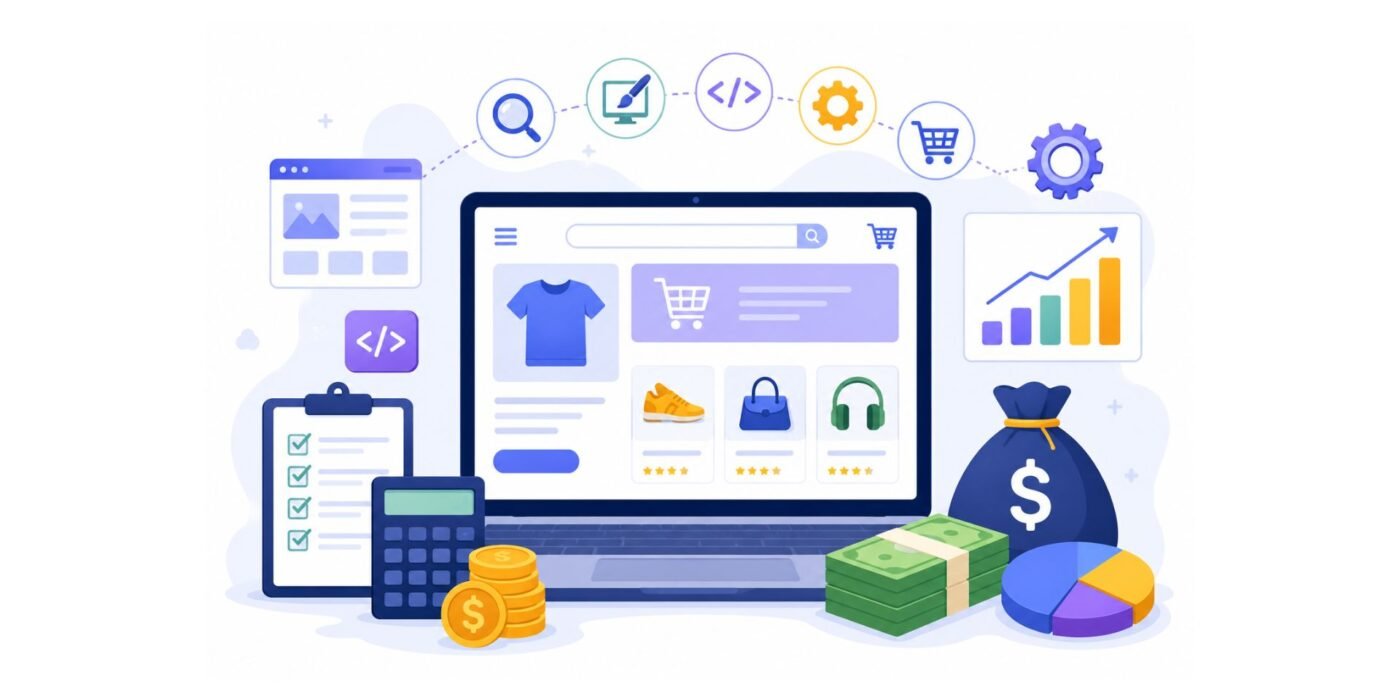
The cost of ecommerce website development can range from a few hundred dollars for a basic online store to tens of thousands of dollars for a fully customized ecommerce solution. Pricing depends on factors such as platform selection, design complexity, features, integrations, security requirements, and ongoing maintenance.
Key Takeaways
- Ecommerce website development costs vary based on business goals and technical requirements.
- Platform selection significantly impacts overall project pricing.
- Custom features and third-party integrations increase development costs.
- Design, security, and performance optimization are important budget considerations.
- Businesses should consider both upfront and ongoing ecommerce expenses.
- Investing in a scalable ecommerce solution often reduces future redevelopment costs.
One of the first questions businesses ask before launching an online store is, “How much does ecommerce website development cost?“
The answer depends on several factors, including the type of ecommerce website you want to build, the platform you choose, the features you require, and the level of customization needed.
While some businesses can launch a basic ecommerce store with a relatively small investment, others may require advanced functionality, custom integrations, and enterprise-level solutions that significantly increase development costs.
Understanding the factors that influence ecommerce website development pricing can help businesses create realistic budgets and make informed investment decisions.
In this guide, we’ll break down ecommerce website development costs, explain the factors that affect pricing, and provide practical insights to help businesses plan their ecommerce projects in 2026.
What Is the Average Ecommerce Website Development Cost?
The average ecommerce website development cost varies depending on business size, project complexity, and platform requirements.
A simple ecommerce store typically costs less than a custom-built ecommerce solution designed for large-scale operations.
Ecommerce Development Cost Overview
| Project Type | Estimated Cost Range |
| Basic Ecommerce Store | Low to Moderate |
| Small Business Ecommerce Website | Moderate |
| Mid-Sized Ecommerce Store | Moderate to High |
| Custom Ecommerce Solution | High |
| Enterprise Ecommerce Platform | Very High |
Rather than focusing solely on cost, businesses should evaluate the value, scalability, and long-term return on investment of their ecommerce solution.
Why Ecommerce Website Development Costs Vary
No two ecommerce websites are exactly alike, which is why development costs can vary significantly from one project to another.
The final cost depends on multiple factors that influence the amount of work required.
- Common Cost Drivers
- Platform selection
- Website design
- Number of products
- Custom functionality
- Third-party integrations
- Security requirements
- Performance optimization
- Maintenance needs
The more complex the project, the higher the development investment is likely to be.
Factors That Affect Ecommerce Website Development Cost
Platform Selection
The ecommerce platform you choose has a direct impact on development costs.
Popular ecommerce platforms include:
Each platform has different:
- Licensing requirements
- Hosting costs
- Development complexity
- Customization capabilities
Businesses should select a platform based on long-term goals rather than short-term budget considerations.
Website Design Requirements
Custom design work can significantly influence ecommerce development costs.
Businesses can choose between:
| Design Option | Cost Impact |
| Pre-Built Templates | Lower |
| Customized Templates | Moderate |
| Fully Custom Design | Higher |
Custom designs often provide stronger branding and improved customer experiences.
Ecommerce Features and Functionality
The number and complexity of features directly affect development costs.
Common ecommerce features include:
- Product search
- Product filters
- Customer accounts
- Wishlists
- Reviews and ratings
- Multi-currency support
- Subscription systems
- Loyalty programs
More advanced functionality typically requires additional development time and resources.
Third-Party Integrations
Many ecommerce stores require integrations with external tools.
Examples include:
- CRM systems
- Email marketing platforms
- Shipping providers
- Inventory management software
- Accounting tools
- Payment gateways
Custom integrations often increase project complexity and cost.
Payment Gateway Setup
Secure payment processing is essential for online stores.
Popular payment solutions include:
- Stripe
- PayPal
- Digital wallets
- Regional payment providers
Integration requirements can affect development pricing.
Security Requirements
Strong security measures protect customer information and business operations but may increase development costs.
Common security investments include:
- SSL certificates
- Security monitoring
- Malware protection
- Secure payment processing
- Two-factor authentication
Security should be viewed as a necessity rather than an optional expense.
Performance Optimization
Fast websites often generate better user experiences and conversion rates.
Performance optimization may include:
- Image optimization
- Caching solutions
- CDN implementation
- Database optimization
- Code improvements
These enhancements can add to development costs but often provide long-term benefits.
E-commerce Development Cost by Business Size
Business size and operational requirements significantly influence ecommerce development budgets.
| Business Type | Typical Development Needs |
| Startup | Basic ecommerce functionality |
| Small Business | Custom branding and integrations |
| Growing Business | Advanced features and scalability |
| Enterprise | Custom architecture and automation |
As business requirements increase, development complexity generally increases as well.
Ecommerce Development Cost by Platform
Different platforms require different levels of investment.
| Platform | Cost Considerations |
| Shopify | Subscription fees and app costs |
| WooCommerce | Hosting, plugins, and customization |
| Magento | Advanced development and infrastructure |
| BigCommerce | Subscription-based pricing |
Choosing the right platform depends on your business objectives, technical requirements, and growth plans.
Planning an Ecommerce Project?
The right ecommerce solution depends on your goals, features, and growth plans. Get expert guidance to estimate your project accurately and avoid unnecessary expenses.
Hidden Ecommerce Website Costs Businesses Should Consider
Many businesses focus only on development costs and overlook ongoing expenses associated with operating an ecommerce website.
Common hidden costs include:
Hosting
Reliable hosting is essential for performance and security.
Premium Plugins
Many advanced ecommerce features require paid extensions.
Maintenance
Regular updates and technical support help maintain website performance.
Security Services
Security monitoring and protection tools may require ongoing investment.
Marketing Expenses
Businesses often invest in:
- SEO
- Content marketing
- Paid advertising
- Email marketing
These costs should be included in overall budgeting.
How to Reduce Ecommerce Website Development Costs
Businesses can reduce development costs by focusing on essential functionality and planning strategically.
Start With Core Features
Launch with the features you need most and expand over time.
Choose the Right Platform
Avoid selecting platforms that exceed your business requirements.
Use Proven Technologies
Established ecommerce solutions often reduce development complexity.
Plan Before Development
Detailed planning helps prevent scope changes and unexpected expenses.
Focus on Long-Term Value
The cheapest solution is not always the most cost-effective option.
Common Ecommerce Development Pricing Mistakes
Businesses frequently make budgeting mistakes that impact project success.
Choosing Based on Price Alone
Low-cost solutions may create future limitations.
Ignoring Scalability
Websites should support future growth.
Underestimating Maintenance Costs
Ongoing support is essential for long-term success.
Overcomplicating Initial Launches
Too many features can increase costs and delay projects.
Avoiding these mistakes helps businesses maximize their investment.
Expert Opinion
One of the biggest mistakes businesses make is focusing exclusively on upfront development costs. A lower initial investment may seem attractive, but choosing the wrong platform or skipping critical functionality can lead to higher expenses later. The most successful ecommerce projects balance cost, scalability, performance, and customer experience from the beginning.
Internal Resources You May Find Helpful
To better understand ecommerce development, explore:
- What Is Ecommerce Development?
- Ecommerce Website Development Process
- What Is WooCommerce Development?
- Shopify Development Guide
- Magento Development Guide
These resources can help you make informed ecommerce decisions.
People Also Ask
How much does ecommerce website development cost?
Ecommerce website development costs vary based on platform choice, design requirements, custom features, integrations, and business objectives.
What affects ecommerce website development pricing?
Key factors include platform selection, functionality, design complexity, integrations, security requirements, and ongoing maintenance.
Is WooCommerce cheaper than Shopify?
WooCommerce often offers greater flexibility in pricing, while Shopify uses a subscription-based model with additional app-related costs.
How much does a custom ecommerce website cost?
Custom ecommerce websites generally require a larger investment because of advanced functionality, custom design, and specialized development requirements.
What are the ongoing costs of an ecommerce website?
Ongoing costs may include hosting, maintenance, security services, premium plugins, and marketing activities.
Ready to Build Your Ecommerce Website?
Whether you’re launching a new online store or upgrading an existing one, our ecommerce development experts can help you create a scalable solution that aligns with your business goals and budget.
Frequently Asked Questions
Development costs may include design, development, integrations, security, testing, and launch-related activities.
Maintenance may or may not be included depending on the development agreement.
The most cost-effective platform depends on your business requirements and long-term goals.
Startups often benefit from starting with essential functionality and scaling as the business grows.
Yes. A professionally developed ecommerce website can improve customer experiences, increase sales, and support long-term business growth.