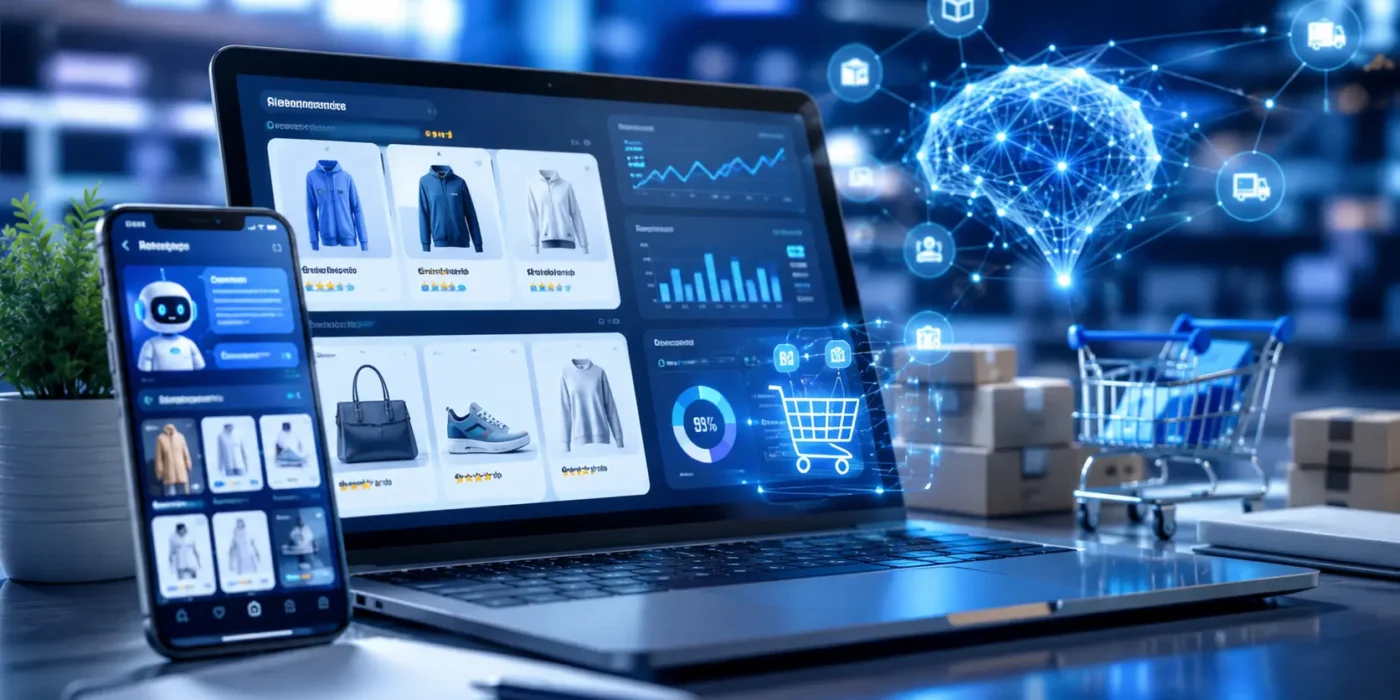
Artificial intelligence is rapidly transforming the way online businesses operate. From personalized product recommendations to intelligent customer support, AI is helping ecommerce brands deliver better shopping experiences while improving operational efficiency.
Whether you’re running a small online store or managing a large ecommerce business, understanding how AI works can help you stay competitive in an increasingly digital marketplace.
Key Takeaways
- AI helps ecommerce businesses automate repetitive tasks.
- Personalized recommendations improve customer engagement and conversions.
- AI-powered chatbots provide instant customer support.
- Ecommerce companies use AI for inventory forecasting and fraud detection.
- AI adoption is becoming a major competitive advantage in 2026.
What Is AI in Ecommerce?
AI in ecommerce refers to the use of artificial intelligence technologies to automate business processes, personalize customer experiences, analyze customer behavior, and optimize online store performance.
AI systems use machine learning, predictive analytics, natural language processing, and automation to help businesses make data-driven decisions and improve sales outcomes.
Quick Facts About AI in Ecommerce
| Topic | Details |
|---|---|
| Technology | Artificial Intelligence |
| Industry | Ecommerce |
| Primary Goal | Automation and Personalization |
| Common Applications | Recommendations, Chatbots, Analytics |
| Business Benefits | Higher Conversions and Efficiency |
Why Is AI Important for Ecommerce?
Modern consumers expect fast, personalized, and seamless shopping experiences.
AI helps ecommerce businesses meet these expectations by analyzing customer data and delivering relevant experiences at scale.
Instead of manually managing every aspect of an online store, businesses can use AI to automate tasks such as:
- Product recommendations
- Customer support
- Inventory management
- Marketing campaigns
- Fraud detection
This allows teams to focus on growth while improving customer satisfaction.
How Does AI Work in Ecommerce?
AI collects data from multiple customer touchpoints, including:
- Search behavior
- Purchase history
- Product views
- Shopping cart activity
- Customer support interactions
The system analyzes these patterns and generates insights that help businesses make smarter decisions.
For example, if a customer frequently purchases fitness products, AI can recommend similar items that match their interests.
Top Benefits of AI in Ecommerce
Personalized Shopping Experiences
Personalization is one of the biggest advantages of AI.
Instead of showing the same products to every visitor, AI delivers tailored recommendations based on individual behavior.
Benefits include:
- Increased engagement
- Higher conversion rates
- Improved customer loyalty
Better Customer Support
AI-powered chatbots can answer customer questions instantly.
Customers can receive assistance with:
- Order tracking
- Product information
- Returns and refunds
- Shipping updates
This improves response times while reducing support costs.
Smarter Inventory Management
Inventory forecasting can be challenging for growing ecommerce businesses.
AI analyzes historical sales data and market trends to predict future demand, helping businesses avoid stock shortages and overstock situations.
Fraud Detection and Security
AI systems can identify suspicious transactions in real time.
By detecting unusual purchasing patterns, businesses can reduce fraud risks and protect customer information.
Marketing Automation
AI helps businesses automate:
- Email marketing
- Audience segmentation
- Product recommendations
- Retargeting campaigns
This leads to more effective marketing with less manual effort.
Real-World AI Use Cases in Ecommerce
AI Product Recommendations
Many online retailers use AI recommendation engines to suggest products based on browsing and purchase history.
Intelligent Search
AI-powered search helps customers find products faster by understanding user intent and search behavior.
Visual Search
Customers can upload images to find similar products available in an online store.
Dynamic Pricing
AI analyzes demand, competition, and customer behavior to optimize pricing strategies.
Customer Service Automation
Chatbots and virtual assistants provide 24/7 support without requiring human intervention for every inquiry.
AI in Ecommerce Statistics
The growing adoption of AI reflects its value across the ecommerce industry.
- More ecommerce businesses are investing in AI-powered personalization.
- AI-driven customer support solutions continue to reduce operational costs.
- Recommendation engines contribute significantly to online sales performance.
- Predictive analytics is becoming a standard feature in modern ecommerce platforms.
Expert Insight
One of the most common mistakes businesses make is implementing AI tools without a clear strategy.
The most successful ecommerce brands use AI to solve specific customer problems rather than simply automating processes. When AI improves the customer experience, businesses often see stronger engagement, higher conversions, and increased customer retention.
Challenges of AI in Ecommerce
Despite its advantages, AI implementation comes with certain challenges.
Data Privacy
Businesses must ensure customer information is collected and managed responsibly.
Initial Setup Costs
Some advanced AI solutions require investment in technology and expertise.
Integration Complexity
AI tools may need to be integrated with existing ecommerce platforms and workflows.
Ongoing Optimization
AI systems require continuous monitoring and improvement to maintain accuracy.
Why Businesses Are Investing in AI-Powered Ecommerce
As online competition increases, businesses need scalable solutions that improve efficiency and customer satisfaction.
Many companies begin by investing in professional Ecommerce Website Development Services to create a strong foundation for AI-powered features and future growth.
AI performs best when integrated into a fast, scalable, and user-friendly ecommerce platform.
Can WooCommerce Use AI?
Yes.
WooCommerce supports a wide range of AI tools and integrations for:
- Product recommendations
- Customer support
- Marketing automation
- Predictive analytics
Businesses looking to implement advanced AI functionality often work with professional WooCommerce Development Services to customize their stores and integrate AI-powered solutions effectively.
Future Trends of AI in Ecommerce
Several innovations are expected to shape the future of ecommerce:
Hyper-Personalization
Customer experiences will become even more tailored and predictive.
Voice Commerce
Voice assistants will continue influencing online purchasing decisions.
Conversational Commerce
AI chatbots will become more sophisticated and human-like.
Predictive Shopping
AI will anticipate customer needs before purchases are made.
Advanced Automation
More business operations will be automated through intelligent systems.
Conclusion
Artificial intelligence is reshaping the ecommerce landscape by helping businesses deliver better customer experiences, automate operations, and make smarter decisions.
From personalized recommendations and intelligent search to predictive analytics and customer support automation, AI is becoming an essential part of successful online stores.
Businesses that embrace AI today will be better positioned to compete, scale, and meet evolving customer expectations in the years ahead.
Frequently Asked Questions
AI in ecommerce refers to the use of artificial intelligence technologies to automate operations, personalize customer experiences, and improve business performance.
AI helps online stores improve product recommendations, customer support, inventory management, marketing, and fraud detection.
Many AI solutions are now affordable and scalable, making them accessible for businesses of all sizes.
Yes. WooCommerce supports numerous AI-powered plugins and integrations for personalization, automation, and analytics.
The future includes hyper-personalization, conversational commerce, predictive shopping, voice commerce, and advanced automation.
Ready to Build an AI-Powered Ecommerce Store?
Boost sales, automate operations, and deliver personalized shopping experiences with AI-driven ecommerce solutions.