Key Takeaways
- E-commerce website development follows a structured lifecycle from planning to post-launch optimization.
- Choosing the right e-commerce platform impacts performance, scalability, and future growth.
- User experience and mobile responsiveness significantly influence conversion rates.
- Secure payment processing and website security are essential for customer trust.
- Testing before launch helps identify issues that could affect customer experience and revenue.
- Continuous optimization ensures sustainable business growth and improved customer retention.
The e-commerce website development process involves planning, market research, platform selection, website design, development, payment integration, testing, launch, and ongoing optimization. Following a structured process helps businesses build secure, scalable, and user-friendly online stores that drive sales and support long-term growth.
The ecommerce industry continues to evolve rapidly as businesses increasingly rely on digital channels to reach customers worldwide. Whether you’re a startup launching your first online store or an established company expanding your digital presence, understanding the ecommerce website development process is crucial for success.
Building an ecommerce website involves much more than selecting a platform and uploading products. A successful online store requires strategic planning, intuitive design, secure functionality, seamless integrations, and ongoing optimization.
Without a structured development process, businesses often face challenges such as poor user experiences, low conversion rates, security vulnerabilities, and scalability issues.
This guide explains every stage of the ecommerce website development process and provides practical insights to help businesses create high-performing online stores in 2026 and beyond.
Why Following an Ecommerce Development Process Matters
A structured ecommerce development process helps businesses reduce risks, improve website performance, enhance customer experiences, and achieve long-term growth goals.
Many ecommerce projects fail because businesses rush into development without proper planning. Following a proven process ensures that every stage, from strategy to launch, is aligned with business objectives.
Benefits of a Structured Development Process
- Better project management
- Faster website launches
- Improved user experience
- Higher conversion rates
- Stronger website security
- Easier scalability
- Lower long-term maintenance costs
Businesses that invest time in planning and execution often achieve better results and avoid expensive redesigns later.
Ecommerce Website Development Statistics
Understanding current ecommerce trends highlights the importance of investing in professional development.
Key Industry Insights
- Ecommerce sales continue to grow globally each year.
- Mobile devices account for a significant percentage of online shopping transactions.
- Customers expect fast-loading websites and seamless checkout experiences.
- Website speed directly impacts conversion rates and customer satisfaction.
- Secure payment processing remains one of the top concerns for online shoppers.
These trends demonstrate why businesses must focus on performance, usability, and security when developing ecommerce websites.
What Is the Ecommerce Website Development Process?
The ecommerce website development process is the structured approach used to plan, design, build, test, launch, and maintain an online store.
The objective is to create a website that provides an excellent shopping experience while supporting business operations and growth.
A successful ecommerce website combines:
- User-friendly design
- Robust functionality
- Secure transactions
- Mobile responsiveness
- Search engine visibility
- Conversion-focused experiences
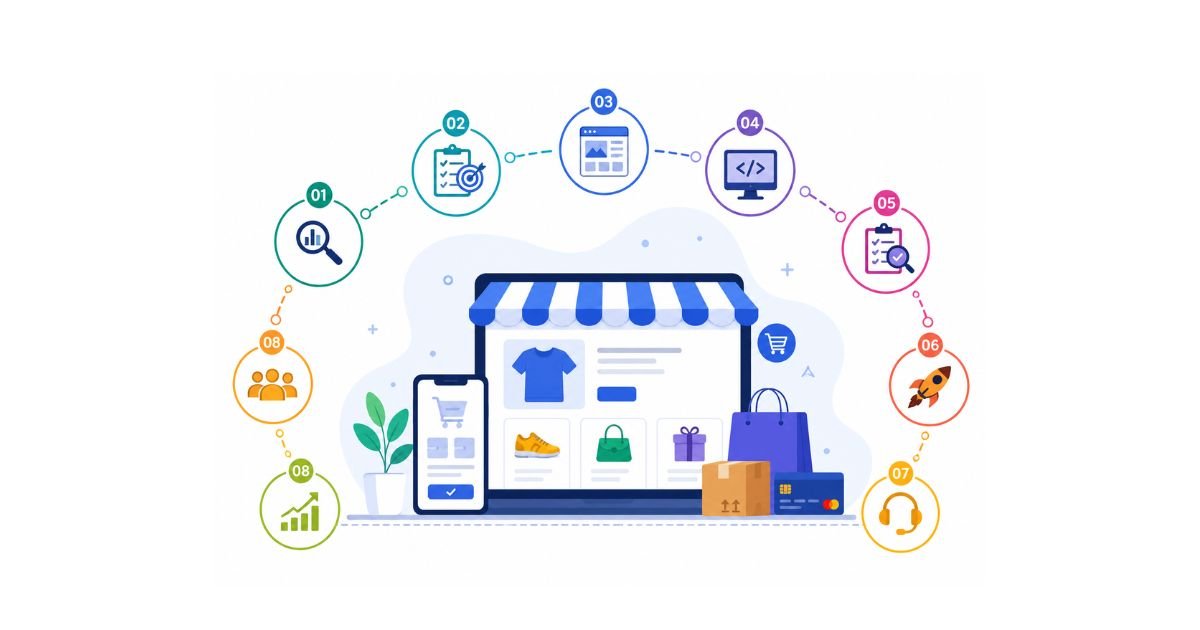
Ecommerce Development Process Overview
| Stage | Objective |
| Planning | Define goals and requirements |
| Research | Understand customers and competitors |
| Platform Selection | Choose the best ecommerce solution |
| Site Architecture | Organize website content |
| UX/UI Design | Create intuitive user experiences |
| Development | Build website functionality |
| Payment & Shipping Setup | Enable transactions and fulfillment |
| Testing | Identify and fix issues |
| Launch | Make the website live |
| Optimization | Improve performance and conversions |
Step 1: Define Business Goals and Requirements
The first step in ecommerce website development is identifying business objectives, target audiences, and project requirements.
Before building an online store, businesses should clearly define what they want to achieve.
Questions to Ask
- Who are your ideal customers?
- What products or services will you sell?
- Which markets will you serve?
- What revenue goals do you have?
- What features are required?
Common Ecommerce Goals
- Increase online sales
- Expand into new markets
- Improve customer experiences
- Strengthen brand visibility
- Streamline operations
Clear objectives provide a foundation for every development decision.
Step 2: Conduct Market and Competitor Research
Market research helps businesses understand customer expectations, identify opportunities, and analyze competitors before development begins.
Research minimizes risks and improves decision-making throughout the project.
Customer Research
Businesses should analyze:
- Customer preferences
- Buying habits
- Device usage
- Shopping behaviors
- Pain points
Competitor Research
Evaluate competitors based on:
- Website design
- Product presentation
- Pricing strategies
- User experience
- Checkout processes
Research helps businesses create a competitive advantage.
Step 3: Choose the Right Ecommerce Platform
Selecting the right ecommerce platform determines how easily your website can scale, integrate with tools, and support business growth.
Popular ecommerce platforms include:
Shopify
Shopify is known for its simplicity, reliability, and scalability.
Best for:
- Startups
- Small businesses
- Direct-to-consumer brands
WooCommerce
WooCommerce offers flexibility and extensive customization options.
Best for:
- Content-driven websites
- WordPress users
- Businesses seeking control
Magento
Magento provides enterprise-level functionality and advanced customization.
Best for:
- Large businesses
- Complex ecommerce operations
- Global brands
BigCommerce
BigCommerce offers built-in ecommerce features and scalability.
Best for:
- Growing businesses
- Multi-channel retailers
Platform Comparison
| Platform | Ease of Use | Customization | Scalability |
| Shopify | High | Medium | High |
| WooCommerce | Medium | High | High |
| Magento | Low | Very High | Very High |
| BigCommerce | High | Medium | High |
Choosing the right platform depends on your budget, technical requirements, and growth plans.
Step 4: Plan Your Website Structure
Website structure determines how customers navigate your store and discover products.
A well-organized website improves usability and search engine visibility.
- Essential Pages
- Homepage
- Category Pages
- Product Pages
- Cart Page
- Checkout Page
- About Us
- Contact Page
- FAQ Page
- Blog
A clear navigation structure helps users complete purchases more efficiently.
Step 5: Design the User Experience (UX)
User experience design focuses on creating intuitive and enjoyable shopping experiences.
Good UX design can directly improve customer engagement and conversions.
Key UX Components
Homepage Design
The homepage should:
- Highlight key products
- Showcase promotions
- Communicate brand value
- Guide visitors toward purchases
Product Pages
Effective product pages include:
- High-quality images
- Detailed descriptions
- Product specifications
- Reviews and ratings
- Clear pricing information
Mobile Optimization
Mobile shopping continues to grow, making responsive design essential for modern ecommerce success.
Step 6: Develop Core Ecommerce Features
Development transforms designs into a fully functional ecommerce website.
This stage includes both frontend and backend development.
Core Features
Product Management
Businesses should be able to:
- Add products
- Update inventory
- Manage categories
- Control pricing
Customer Accounts
Features may include:
- Registration
- Order history
- Saved addresses
- Wishlists
Shopping Cart
Customers should be able to:
- Add products
- Update quantities
- Apply coupons
- Review orders
Search Functionality
Advanced search and filtering improve product discovery and customer satisfaction.
Need Expert Ecommerce Development Support?
Step 7: Integrate Payment and Shipping Solutions
Payment and shipping integrations enable secure transactions and efficient order fulfillment.
Payment Gateway Integration
Popular solutions include:
- Stripe
- PayPal
- Credit card processors
- Digital wallets
Offering multiple payment options can improve conversion rates.
Shipping Setup
Businesses should configure:
- Shipping zones
- Delivery methods
- Shipping costs
- Tracking capabilities
Transparent shipping information helps reduce cart abandonment.
Step 8: Implement Website Security
Website security protects customer information and builds trust in your ecommerce brand.
Essential security measures include:
- SSL certificates
- Data encryption
- Secure payment processing
- Strong password policies
- Two-factor authentication
- Regular software updates
Security should be integrated throughout the development process.
Step 9: Test the Website Before Launch
Testing helps identify issues before customers interact with the website.
Testing Checklist
| Testing Area | Purpose |
| Functionality Testing | Verify features work correctly |
| Mobile Testing | Ensure mobile responsiveness |
| Performance Testing | Improve speed and stability |
| Security Testing | Identify vulnerabilities |
| Browser Testing | Confirm compatibility |
Comprehensive testing reduces the risk of post-launch issues.
Step 10: Launch Your Ecommerce Website
The launch phase involves making the website publicly available after completing final checks and optimizations.
Before launch:
- Verify payment systems
- Test checkout functionality
- Configure analytics
- Submit XML sitemaps
- Set up SEO essentials
A successful launch establishes the foundation for future growth.
Step 11: Optimize and Maintain the Website
Ongoing maintenance ensures your ecommerce website remains secure, fast, and competitive.
Post-launch activities include:
- Monitoring website performance
- Updating software
- Fixing bugs
- Improving page speed
- Publishing content
- Enhancing security
Continuous optimization helps maximize long-term success.
Common Ecommerce Development Mistakes to Avoid
Skipping Planning
Insufficient planning often leads to delays and unexpected costs.
Choosing the Wrong Platform
A platform that cannot support future growth can create scalability challenges.
Ignoring Mobile Users
Mobile optimization is essential for modern ecommerce websites.
Complicated Checkout Processes
Long or confusing checkout flows can increase cart abandonment.
Neglecting Security
Weak security can damage customer trust and business reputation.
Avoiding these mistakes can save time, money, and resources.
Expert Insight
Many businesses focus heavily on visual design while overlooking scalability, performance, and customer experience. The most successful ecommerce websites are built with long-term growth in mind. Investing in proper planning, platform selection, and optimization early can prevent costly redesigns and technical challenges in the future.
Internal Resources You May Find Helpful
To deepen your understanding of ecommerce development, consider exploring:
- What Is Ecommerce Development?
- Ecommerce Website Development Cost
- Shopify Development Guide
- WooCommerce Development Guide
- Magento Development Guide
These resources can help businesses make informed development decisions.
People Also Ask
What are the stages of ecommerce website development?
The main stages include planning, research, platform selection, design, development, payment integration, testing, launch, and optimization.
How much does ecommerce website development cost?
Costs vary depending on project complexity, platform choice, custom features, and integration requirements.
Which ecommerce platform is best for small businesses?
Many small businesses choose Shopify because it offers ease of use, strong security, and scalability.
Can I create an ecommerce website without coding?
Yes. Platforms like Shopify and WooCommerce provide tools that allow users to create ecommerce websites without extensive technical knowledge.
Why is mobile optimization important for ecommerce?
Mobile optimization improves user experience, increases conversions, and supports the growing number of mobile shoppers worldwide.
Frequently Asked Questions
Ecommerce website development is the process of building, launching, and maintaining online stores that allow businesses to sell products or services online.
It helps businesses reach more customers, increase sales, improve customer experiences, and support long-term growth.
Timelines vary depending on complexity but generally range from a few weeks to several months.
Planning is often considered the most important stage because it establishes the foundation for the entire project.
Yes. A professionally developed ecommerce website can improve revenue, customer engagement, and business scalability.

Ready to Launch Your Ecommerce Store?
Transform your ecommerce vision into a high-performing online store with expert ecommerce development solutions tailored to your business goals.
Start Your Project Today